Set the room context
Begin with the spaces, risks and approved instructions that govern your site.
Hospitality · Sector operations
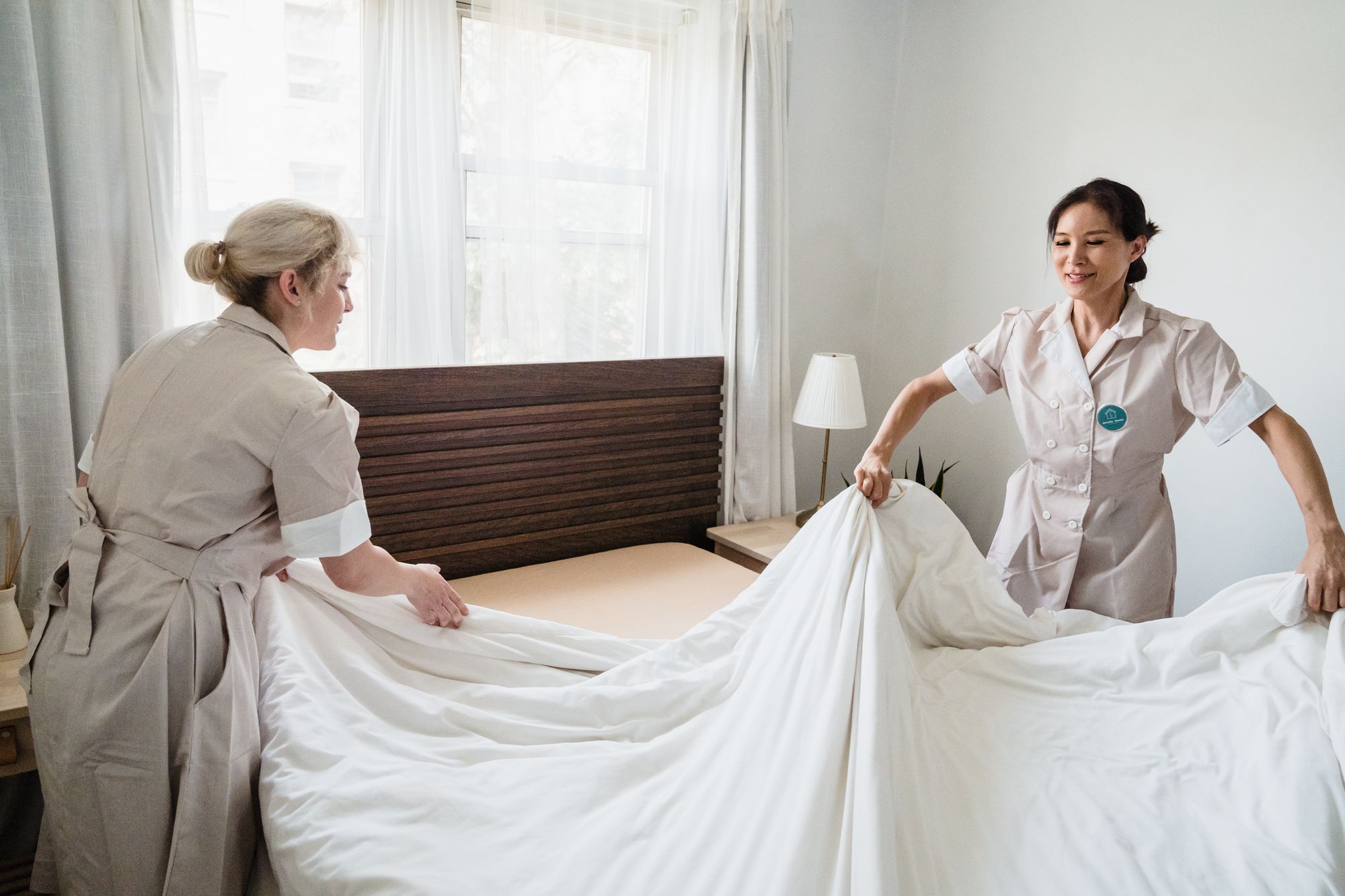
Hospitality cleaning spans guest rooms, public areas, kitchens, banquet spaces, washrooms and laundry. The operating challenge is consistency across many recurring tasks without losing sight of consumption and replenishment.
Designed around your operation
Connect room readiness, property-defined workload and supervisor review in one practical flow.
Explore the operating areas
Context · area and approved method
✓Ownership · responsible team
✓Evidence · completion and exceptions
✓Review · accountable closure
↗A simple working rhythm
Begin with the spaces, risks and approved instructions that govern your site.
Make responsibilities and operating constraints visible before work begins.
Record exceptions and route unresolved items to the responsible person.
Before you begin
Useful tools start with clear boundaries.
No. Use the planner alongside approved SOPs and locally defined responsibilities. It structures the work; it does not set your operating standard.
Saved drafts and snapshots stay in the browser where they were created. They are not account-synced or automatically shared across devices.
The Guides and Help sections explain each sector planner, including local storage and source references.
01 · Recognise the context
The surface, soil, frequency, people and control requirements change from one space to another. Name the area before choosing a method or tool.
Hard surfaces, glass, bathrooms, linen and room-turnover work.
High-touch surfaces, floors and appearance-sensitive zones.
Dishwashing, grease and food-service equipment.
Carpet, upholstery, glass and event-turnover cleaning.
Daily care, sanitary fixtures and mineral scale.
Mixed property-wide housekeeping requirements.
02 · Decide what matters
These priorities help separate the important operational constraints from background noise.
Repeatable room and event-turnover workflows reduce missed tasks when occupancy changes quickly.
Laundry, washroom, floor and guest-room chemistry benefits from measured use and stock planning.
Guest-facing surfaces must be clean while also protecting finish-sensitive materials and presentation quality.
Working tool · Hospitality
Turn today's departure and stayover mix into a transparent housekeeping workload view using your property's own room credits. The tool shows the math; supervisors keep final assignment control.
Enter the room mix, available attendants and your local room credits. RoomFlow will show the workload clearly before a supervisor makes assignments.
Supervisor review
Assignment boundary
Working tool · Hospitality
Record a room inspection against your property's own standard, preserve the defect category and make rework or release visible. RoomInspect supports quality control; the property standard remains authoritative.
Enter the room, inspection result and property standard. RoomInspect will make rework, reinspection and release responsibilities explicit.
Quality sequence
Release boundary
04 · Diagnose the execution gap
Hospitality's core execution problem is synchronized turnover under labour pressure: the property must convert occupancy and room status into balanced work, verify quality, replenish supplies and communicate exceptions in real time.
Housekeeping demand changes with departures, stayovers, arrivals, DND/service-declined rooms and special tasks. Static room counts do not represent actual work.
Practical responseBuild an occupancy-aware housekeeping workload planner that converts room/task mix into credits or locally calibrated labour demand.
AHLA's 2025 survey found 65% of surveyed hotels reported staffing shortages, with housekeeping the most-cited shortage. Understaffing makes balanced task allocation and exception handling operationally critical.
Practical responseBuild a daily assignment balancer that distributes room and public-area work by credits, floor/location, skill and available staff, while keeping supervisor override.
Operational systems distinguish dirty, clean, inspected, pickup and occupancy states; stale or inconsistent status creates front-office/housekeeping friction.
Practical responseBuild a lightweight room-turnover board or integrate with PMS status, with timestamps, inspection state, DND, maintenance holds and escalation.
A room can be marked complete while presentation or hygiene defects remain. Supervisors need risk- and quality-based inspection rather than random memory-driven checks.
Practical responseBuild a room inspection tool with property-defined standards, defect categories, photo evidence, coaching and repeat-defect trends.
Housekeepers often discover bulbs, leaks, HVAC, plumbing, furniture or equipment problems first, but defects can be lost between departments.
Practical responseBuild a one-tap maintenance trace from room checklist to engineering, preserving room, asset, photo, urgency and closure status.
Guest-room amenities, washroom consumables, laundry chemicals and cleaning concentrates are used continuously, but replenishment is often disconnected from actual occupancy and task volume.
Practical responseBuild an occupancy-linked par and chemical-demand planner using historical usage, occupancy, rooms cleaned and laundry volume.
Laundry joins linen availability, stain handling, load planning, chemistry, rewash and room demand; a failure in one area affects room readiness.
Practical responseBuild a laundry operations tool for load planning, linen par, rewash reasons, chemical consumption and shortage alerts.
Banquet and meeting spaces create short, variable reset windows across floors, glass, washrooms, upholstery and waste.
Practical responseBuild an event-turnover planner that converts event schedule, room size and reset standard into timed multi-team task lists.
05 · Choose the smallest useful tool
Nova helps interpret source-aware questions, Metricon handles transparent calculations, and CheckMate compares evidence that should agree.
Ask product, material, housekeeping and document questions in context.
Open tool Metricon Usage calculatorMeasure product use per room, load or task and project future consumption.
Open tool Metricon Cost per useCompare working-solution cost for recurring housekeeping tasks.
Open tool Metricon Coverage calculatorEstimate volume for floors, banquet areas and other measured surfaces.
Open tool Metricon TCO calculatorCompare quoted product cost with logistics, quality and carrying costs.
Open tool CheckMate Delivery MatchCheck delivered quantity, pack and product evidence against expected records.
Open tool06 · Keep ownership clear
Clarity improves when each person can see what they own, what they need from others and which exceptions still require action.
A clear, balanced task sheet with room status and exceptions.
Workload balancing, inspection, rework and room-readiness control.
Reliable room status and visibility into holds or delayed readiness.
Structured defect handoffs and occupancy-linked replenishment demand.
07 · Verify that work is moving
Use observable operating signals. The underlying tasks, evidence and exceptions should stay inspectable instead of collapsing into an opaque score.
Reference framework
These pages organise work; they do not replace the controlled document, facility procedure or authoritative guidance that defines the actual requirement.
Use approved housekeeping SOPs, food-service procedures, laundry standards, product labels, SDS and local operating requirements for the actual method and frequency.
Close the loop
Use the sequence to move from the real operating situation to a clear next action. Product labels, SDS, approved procedures and accountable specialist decisions remain authoritative where they apply.
Name the context
Use the smallest relevant tool
Verify the evidence and ownership