
How to use this guide
Read for the decision you need to make.
Turn a campus standard into room-type schedules, facility issue routing, chemical control and accountable closure across many buildings. Use the sections below to understand the logic, then use the working sequence to turn that understanding into a concrete next step.
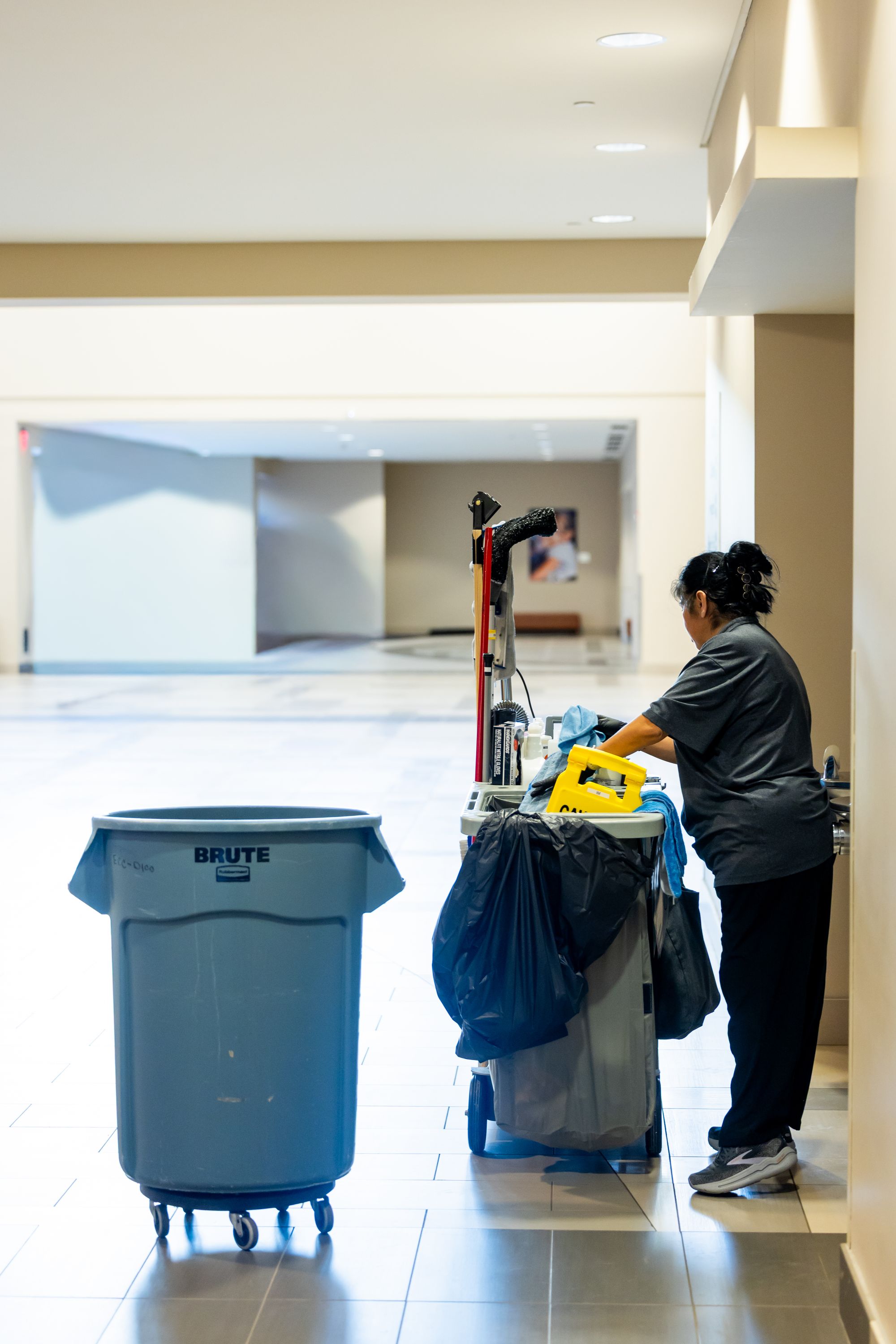
Use the visual and written context together; the operational decision still depends on the approved source, local conditions and accountable review.
01 · Core idea
Plan by room type
Classrooms, washrooms, cafeterias, hostels and labs should not be managed as one generic task because their routines and ownership differ.
02 · Core idea
Make facilities issues routable
When staff see damage, supply shortages or maintenance issues, the observation should become a clear owner, due date and closure path.
03 · Core idea
Preserve building knowledge
Room history, recurring problems and handover notes reduce the amount of operational knowledge lost when staff change.
Decision boundary
Know what the guide can clarify — and what it cannot authorise.
Use this guidance to structure the task, inputs and review. Product labels, SDS, technical documentation, contracts, approved SOPs and accountable human decisions remain authoritative where they apply.
Working sequence
Turn the guide into an operating sequence.
Use these steps as a compact handoff from reading back to the real task.
- 01
Choose the room or area type.
- 02
Apply the approved campus standard.
- 03
Assign frequency and ownership.
- 04
Capture exceptions during the visit.
- 05
Route and close unresolved facility issues.